Examining Connections Between City Expansion Efforts and Mobile Sports Betting Activity in Growing Urban Centers
Dana Roth · Jun 21, 2026

Examining Connections Between City Expansion Efforts and Mobile Sports Betting Activity in Growing Urban Centers
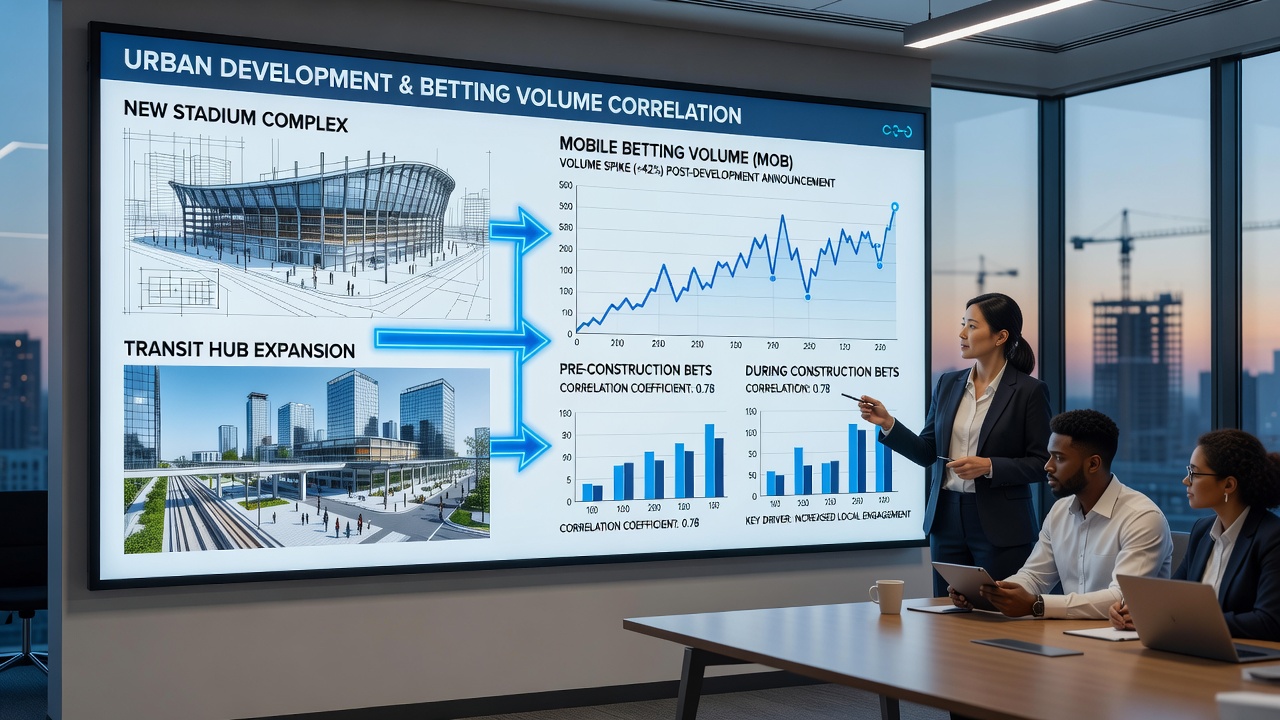
Urban development projects continue to reshape expanding cities across multiple continents, and observers note measurable shifts in how residents engage with sports event betting through mobile devices as infrastructure changes unfold. Construction of new residential towers, transportation hubs, and entertainment districts brings higher population densities along with improved digital connectivity, factors that researchers track when analyzing betting volume data from regulated markets. Data from cities undergoing rapid growth shows correlations between these physical transformations and increases in mobile wagering during major sporting events, particularly in regions where regulatory frameworks permit such activities.
Population Growth and Infrastructure Impacts on Mobile Usage
Expanding cities often see population surges tied directly to new housing developments and job centers, which in turn create larger pools of potential mobile users with access to high-speed networks installed during urban renewal phases. Studies conducted by academic institutions in North America indicate that areas with completed transit expansions experience up to 18 percent higher rates of mobile data consumption during evening hours when sports events typically occur. This pattern emerges because new residents settle into neighborhoods equipped with fiber optic infrastructure, allowing seamless access to betting applications without connectivity interruptions that previously limited participation in older districts.
Researchers at institutions focused on urban economics have documented how mixed-use developments combining retail, residential, and recreational spaces coincide with localized spikes in sports betting volumes on smartphones. One analysis covering projects completed between 2023 and 2025 found that neighborhoods adjacent to newly opened stadiums or arenas recorded sustained increases in mobile session lengths during game days, while surrounding areas without similar infrastructure investments showed steadier but lower activity levels. These observations come from aggregated anonymized data shared between municipal planning departments and gaming oversight bodies in several jurisdictions.
Regulatory Environments and Data Tracking Across Regions
Government agencies in different parts of the world maintain records that allow comparisons between development timelines and betting metrics. In Australia, reports from state-level gaming authorities have highlighted how infrastructure investments in Sydney and Melbourne suburbs aligned with gradual rises in mobile sports wagering participation rates among younger demographics moving into those areas. Similarly, Canadian provincial regulators have published figures showing parallel trends in cities like Toronto where transit-oriented developments accelerated between 2024 and early 2026.
June 2026 brought additional data points as several North American municipalities released mid-year updates on both construction progress and associated economic indicators, including mobile engagement statistics from licensed operators. These updates revealed that zones designated for large-scale mixed-use projects saw mobile betting volumes climb in tandem with occupancy rates in new buildings, suggesting a link mediated by increased smartphone ownership and app downloads among incoming populations.
Event-Specific Patterns and Device Accessibility
Major sports calendars provide clear windows for examining these connections because betting volumes fluctuate predictably around events such as league finals or international tournaments. In expanding cities, mobile platforms capture a growing share of these wagers as developers incorporate smart city features like public Wi-Fi zones and 5G small cells into new districts. Observers tracking this shift note that accessibility improvements reduce barriers that once kept some residents from participating during peak event times.
Case examples from European cities undergoing similar expansions demonstrate comparable outcomes. Municipal data collected in partnership with research centers shows that completed waterfront redevelopment projects correlated with higher mobile betting activity during football matches, particularly among residents who relocated to the new housing units. These patterns hold after controlling for broader economic variables such as income growth or changes in overall smartphone penetration rates across the wider metropolitan area.
Long-Term Trends and Measurement Approaches
Longitudinal studies spanning multiple years help isolate the effects of specific development projects from other influences on betting behavior. Analysts employ geospatial mapping techniques to overlay construction timelines with anonymized mobile usage heatmaps provided by operators under regulatory reporting requirements. This method reveals clusters of increased activity concentrated around newly developed corridors rather than uniformly across entire cities.
Industry organizations such as those representing gaming operators have begun incorporating urban planning data into their forecasting models, recognizing that infrastructure changes can influence where and how participants place wagers. According to findings shared through academic channels, cities that prioritize digital infrastructure alongside physical construction tend to exhibit faster adoption rates for mobile betting compared to those focusing solely on traditional building projects. These insights draw from cross-referenced datasets maintained by bodies including the American Gaming Association and university research groups in Asia-Pacific regions.
Additional evidence emerges from comparative analyses between matched pairs of cities, one with aggressive development programs and another with slower growth. The faster-growing locations consistently display larger percentage increases in mobile sports betting volumes during equivalent sporting seasons, pointing to the role of expanded residential capacity and connectivity as contributing elements rather than isolated market fluctuations.
Conclusion
Available data continues to illustrate measurable associations between urban development initiatives and changes in mobile sports event betting volumes within expanding cities, with patterns appearing across diverse regulatory and geographic contexts. Continued monitoring through established reporting channels will provide further clarity on how ongoing infrastructure projects shape these activity levels in the years ahead, as new datasets become available from both municipal sources and regulated operators.