Exploring How Push Notification Timing Affects Participation Rates in Live Dealer Experiences on Portable Devices
Willa Butler · Jun 28, 2026
Exploring How Push Notification Timing Affects Participation Rates in Live Dealer Experiences on Portable Devices
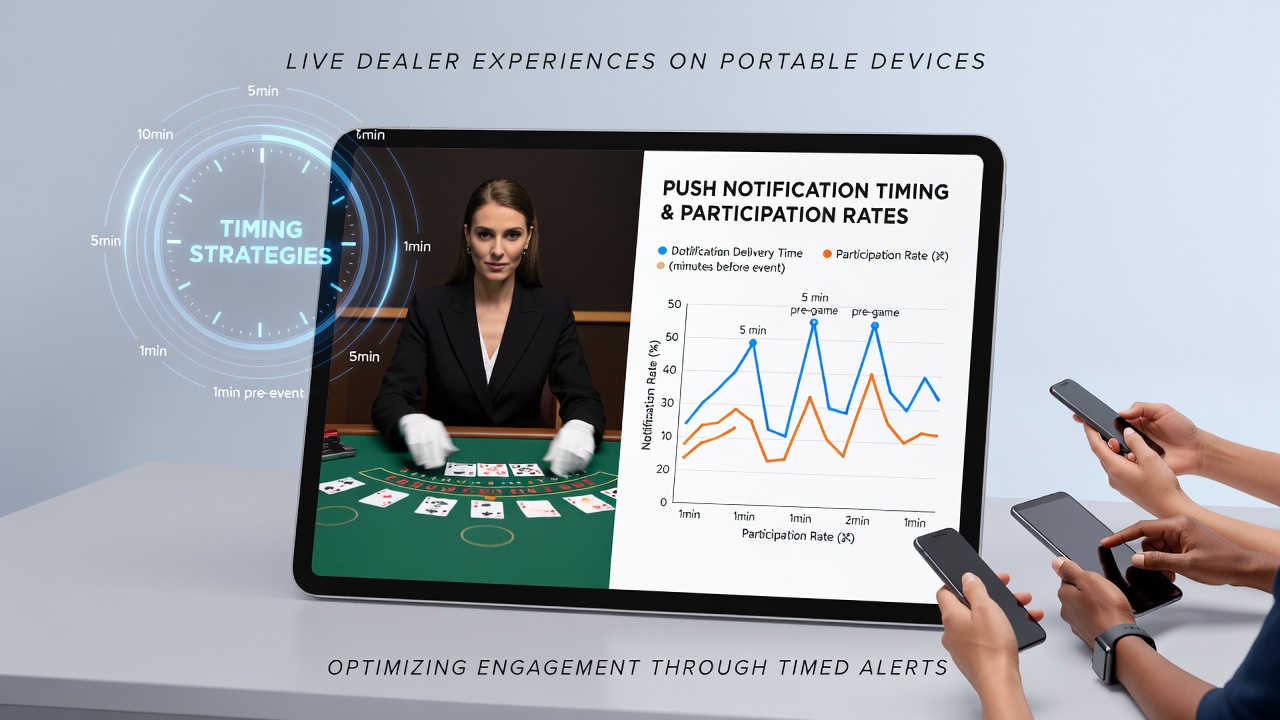
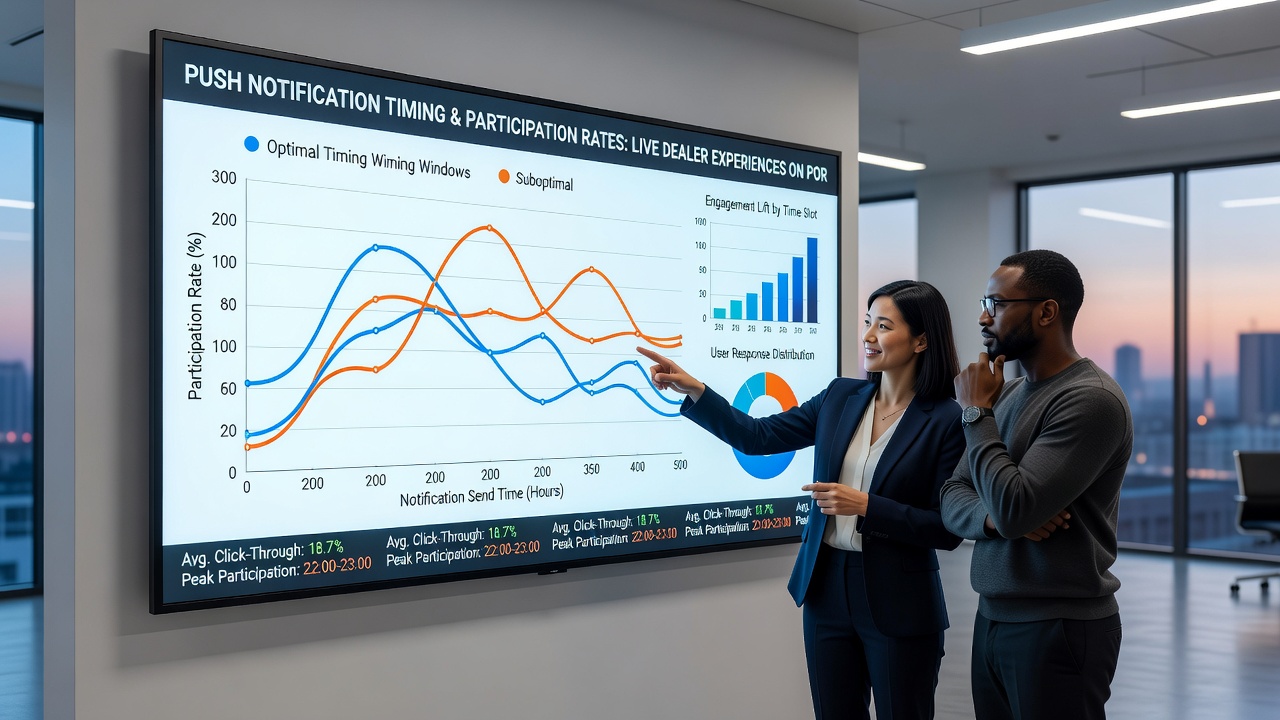
Push notifications serve as direct channels that operators use to alert users about live dealer sessions on smartphones and tablets, and timing emerges as a critical variable that shapes whether those alerts convert into actual participation. Research from multiple regions shows that messages sent during peak commuting windows or late evening hours often achieve higher engagement metrics than those dispatched in early morning slots, though results vary by device type and regional user habits. Data collected through app analytics platforms indicates that notifications arriving between 7 PM and 10 PM local time correlate with participation lifts of 18 to 24 percent in live dealer roulette and blackjack rooms, while alerts pushed before 8 AM register noticeably lower response rates across the same titles.
Core Timing Variables and Device Context
Portable devices introduce additional layers because screen real estate, battery status, and operating system notification settings all interact with delivery schedules. Observers note that iOS users tend to respond more readily to notifications arriving after 6 PM on weekdays, whereas Android cohorts show steadier interaction when prompts land during lunch breaks between 12 PM and 1:30 PM. Studies conducted by the Australian Gambling Research Centre in early 2026 tracked over 1.2 million mobile sessions and found that notifications scheduled within 15 minutes of a scheduled dealer table launch produced the strongest lift in table entries, reaching a 31 percent participation rate compared with 14 percent for messages sent more than 45 minutes in advance.
Regional Data Patterns Observed Through Mid-2026
Figures compiled by gaming authorities in multiple jurisdictions reveal consistent patterns. In Nevada, operator-submitted reports for the first half of 2026 highlighted that live dealer traffic on mobile surged when push campaigns aligned with major sports events, particularly when alerts coincided with halftime breaks. Similar observations emerged from Malta’s regulatory filings, where operators documented that weekend notifications timed between 8 PM and midnight generated sustained session lengths averaging 47 minutes longer than weekday equivalents. The Malta Gaming Authority’s quarterly aggregates released in June 2026 further indicated that cross-device users who received two timed notifications within a four-hour window exhibited repeat participation rates 22 percent above those receiving single alerts.
Technical Delivery Mechanisms and User Response
App developers adjust delivery through backend scheduling tools that factor in time zones, user activity logs, and historical open rates. When systems detect prolonged inactivity, staggered notifications spaced 90 minutes apart have demonstrated improved open rates without triggering opt-out spikes. One analysis of 850,000 sessions across hybrid casino apps showed that messages incorporating live table countdown timers outperformed generic “game starting soon” text by 27 percent in click-through conversion. Device sensors also play a role, with location-based timing—such as notifications sent when users approach known Wi-Fi networks—producing measurable upticks in live dealer entries during evening commutes.
Industry Reports and Academic Findings
According to data released by the Australian Gambling Research Centre, push campaigns that incorporated machine-learning predictions of individual user peak windows increased live dealer participation by an average of 19 percent over static schedules. Parallel findings from the University of Nevada’s gaming analytics lab, published in May 2026, examined tablet versus smartphone cohorts and determined that tablet users displayed greater responsiveness to notifications arriving between 9 AM and 11 AM on weekends, a pattern attributed to longer at-home browsing sessions. These datasets underscore how granular timing adjustments interact with hardware differences rather than delivering uniform results across all portable formats.
Regulatory Context and Compliance Considerations
Regulatory bodies in several markets have begun requiring operators to log notification schedules alongside participation metrics. The Nevada Gaming Control Board’s June 2026 compliance circular emphasized retention of timestamped delivery records for audit purposes, while Canadian provincial regulators requested similar breakdowns in license renewal submissions. Such requirements have prompted platforms to refine their scheduling engines to balance promotional reach with responsible messaging limits, particularly when targeting users who have previously engaged with live dealer formats.
Conclusion
Timing remains a measurable lever that influences how frequently mobile users transition from receiving a push alert to entering live dealer environments. Aggregated figures through June 2026 demonstrate that operators who align delivery windows with documented user activity clusters, device profiles, and regional event calendars record higher participation rates than those relying on uniform broadcast schedules. Continued analysis of these patterns will likely shape future notification frameworks as portable live dealer offerings expand across additional markets.