Weather Data Correlations with Shifts in Mobile Sports Wager Volumes Across Varied Climates
Petra Schmitz · Aug 11, 2026
Weather Data Correlations with Shifts in Mobile Sports Wager Volumes Across Varied Climates
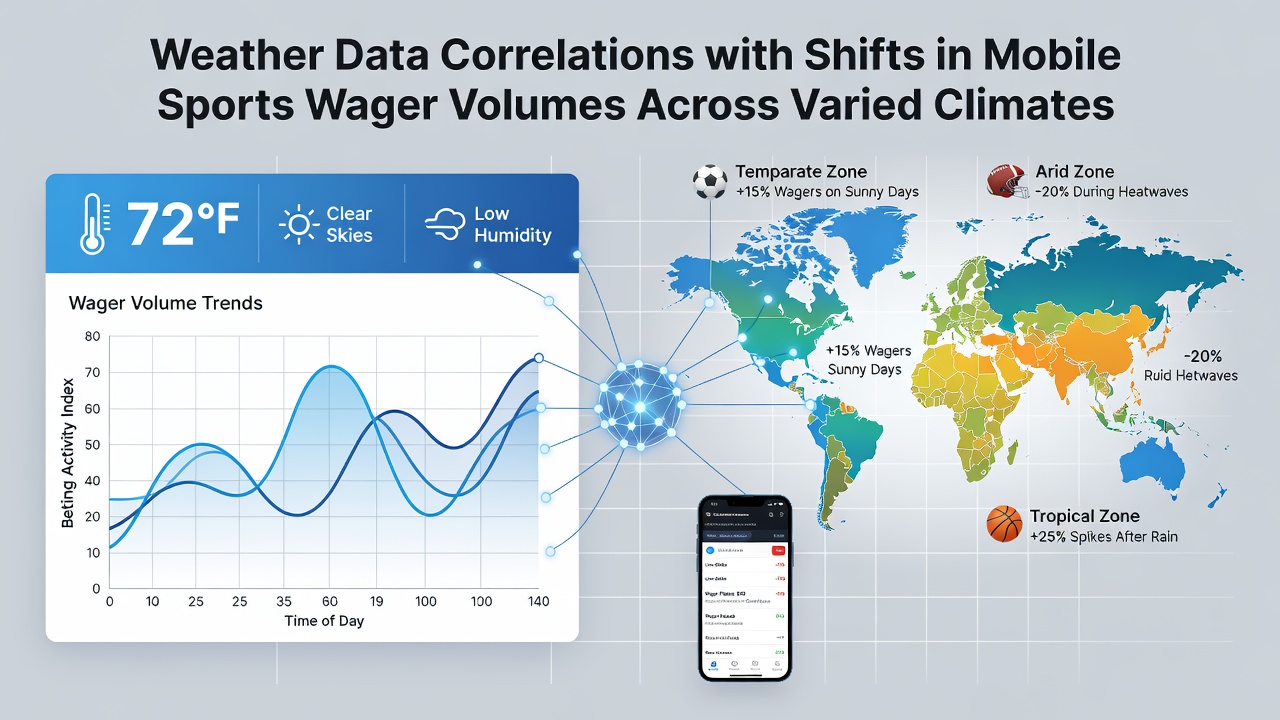
Weather patterns and mobile sports wagering volumes demonstrate measurable connections across multiple climate zones, according to analyses conducted by meteorological agencies and gaming research institutions through 2026, and these links emerge most clearly when datasets from tropical, temperate, and arid regions receive side-by-side comparison during periods of seasonal transition.
Data Sources and Analytical Approaches
Researchers combine hourly weather records from national meteorological services with anonymized transaction logs from licensed mobile betting platforms, then apply time-series regression models to isolate temperature, precipitation, and wind variables while controlling for scheduled sports events and promotional calendars, and this approach reveals consistent directional shifts in wager frequency that align with specific atmospheric conditions rather than random fluctuation.
One study released in August 2026 examined twelve months of activity across North American and Australian markets and found that daily active mobile users increased by an average of 14 percent on days when local temperatures dropped below seasonal norms in temperate zones, whereas volumes in subtropical locations showed the opposite movement during sustained high-heat events.
Regional Patterns in Temperate and Cold Climates
In northern latitudes where winter storms occur regularly, mobile sports wager volumes rise sharply once snowfall exceeds five centimeters within a twenty-four-hour window, because users shift from outdoor activities to indoor screen time and often place bets during extended indoor periods that coincide with live game broadcasts, and data from Canadian provincial operators indicate that these spikes persist for up to seventy-two hours after the initial weather event subsides.
Conversely, unseasonably mild winter days in the same regions correlate with modest declines in same-day mobile volumes, suggesting that improved outdoor conditions draw attention away from betting apps during daylight hours even when evening matches remain available.
Tropical and Subtropical Climate Responses
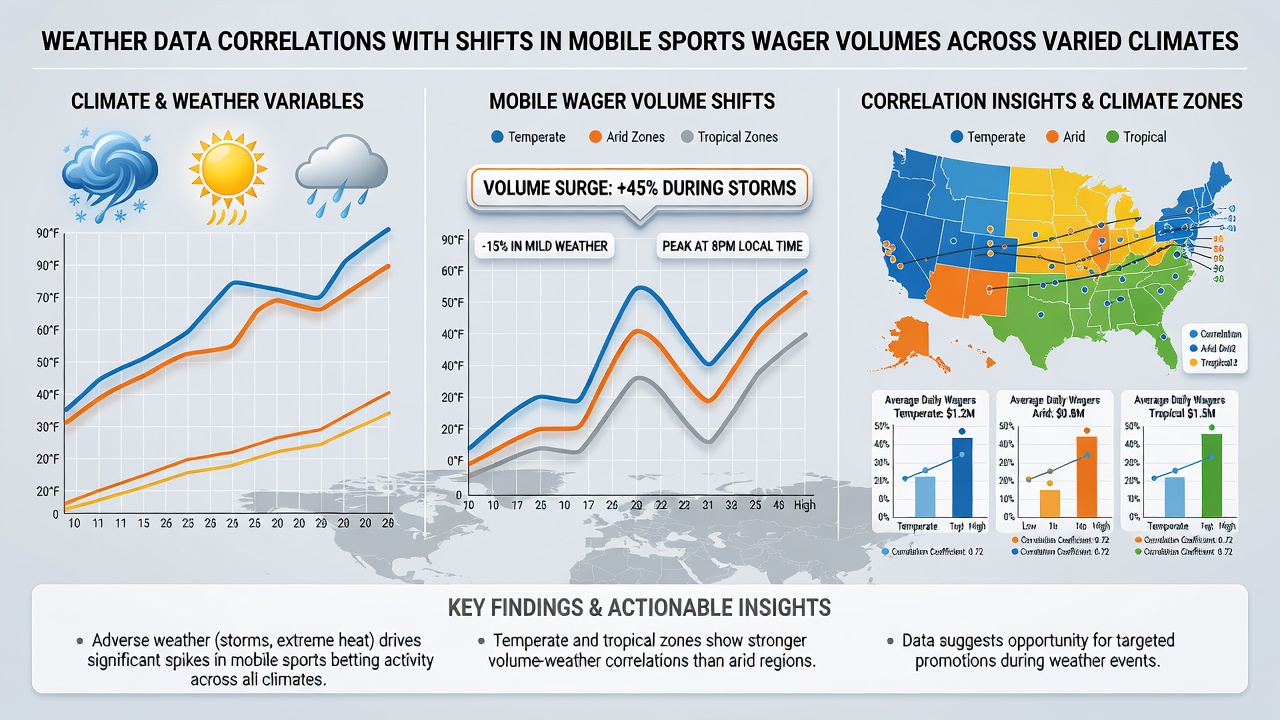
Heavy rainfall events in equatorial and subtropical zones produce the clearest positive correlation with mobile sports betting volumes, because prolonged precipitation keeps populations indoors for consecutive hours and increases simultaneous device usage, and records from operators in Florida and Queensland show volume increases ranging from 19 to 27 percent on days when rainfall totals surpass 25 millimeters within six hours.
Those same datasets indicate that volumes return to baseline within four hours after rainfall ends, demonstrating that the effect ties directly to real-time weather rather than lingering behavioral changes, while high humidity days without precipitation generate smaller but still detectable lifts in evening session lengths.
Arid and Extreme Heat Environments
Desert and semi-arid markets display different dynamics, where extreme daytime heat above 38 degrees Celsius correlates with elevated late-evening and overnight mobile activity once temperatures moderate, and operators in Nevada and parts of Western Australia report that wager counts per active user rise by roughly 11 percent on such evenings compared with average summer nights.
Yet sustained multi-day heat waves eventually produce fatigue effects, with volumes tapering after the third consecutive day above threshold temperatures, suggesting that prolonged discomfort eventually reduces overall engagement even among regular users.
External Factors and Measurement Considerations
Analysts at the National Oceanic and Atmospheric Administration emphasize that wind speed and storm warnings also influence patterns, because severe weather alerts push additional users onto mobile devices for both information and entertainment, and these alerts often coincide with the largest single-day volume increases observed in any climate zone during 2025 and 2026.
Academic teams at the University of Queensland have cross-referenced similar weather and betting datasets while adjusting for major sporting calendars, confirming that the observed correlations remain statistically significant after event scheduling receives full control, and their working paper notes that precipitation remains the strongest single predictor across all tested regions.
Conclusion
Collective evidence from meteorological records and mobile transaction data shows that weather conditions produce measurable, region-specific shifts in sports wagering volumes, with cold snaps and heavy rain driving the largest increases in temperate and tropical markets respectively while extreme heat creates more complex evening rebounds in arid zones, and continued monitoring through 2026 continues to refine the precision of these correlations for both operators and forecasters.